A Perfect Score for All the Wrong Reasons
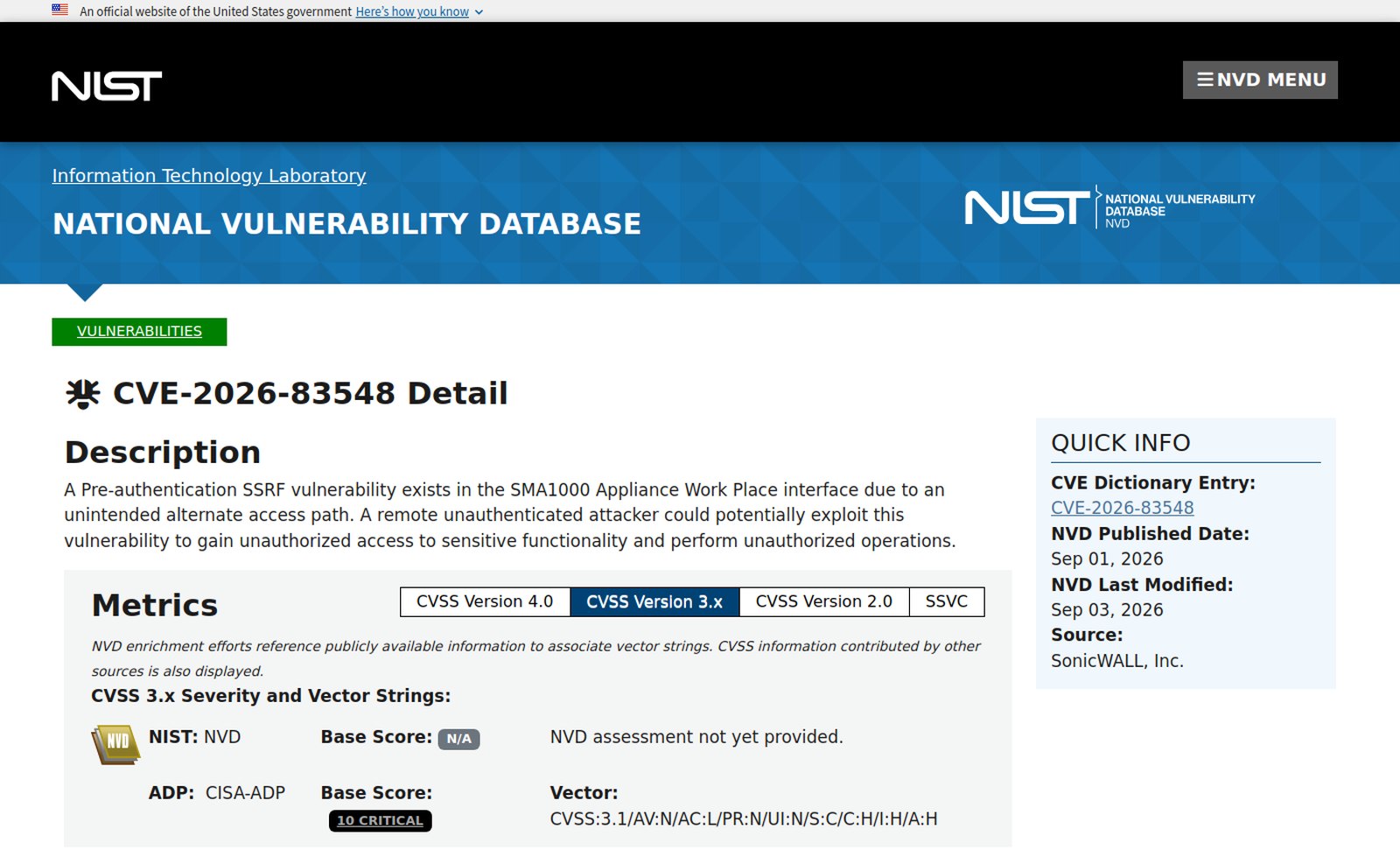
On September 1, 2026, the National Vulnerability Database published an entry that any security team running SonicWall gear needed to see immediately: CVE-2026-83548, a pre-authentication server-side request forgery flaw in the SMA 1000 series, carrying a CVSS score of 10.0. A perfect ten is rare, and it means exactly what it sounds like. Anyone on the internet can reach this appliance, needs no credentials, needs no user interaction, and can walk away with something that should never have been exposed in the first place.
SonicWall confirmed it days later. The vulnerability was already being exploited in the wild.
What the SMA 1000 Actually Does
The SMA 1000 series is SonicWall's secure remote access line, the appliance sitting between a company's internal network and every employee who needs to log in from somewhere else. For a lot of mid-sized businesses, it is the front door for remote work itself. VPN gateways like this one occupy a strange spot in most security programs. They are internet-facing by design, because that is the entire point of remote access, yet they often get far less scrutiny than the applications sitting behind them. Nobody thinks about patching the front door once it has been installed and working for a while.
CVE-2026-83548 lives in the Appliance Work Place interface, the part of the SMA 1000 that manages access to internal resources. According to SonicWall's own advisory (SNWLID-2026-0016), the flaw exists because of an unintended alternate access path, one that exposes forward-proxy functionality to a remote user who has never authenticated at all. In plain terms, the appliance will make requests on an attacker's behalf to places it should never be told to reach, and it will do it for anyone who asks, no login required.
A companion flaw, CVE-2026-83549, was disclosed at the same time. On its own it is serious. Combined with CVE-2026-83548, researchers and multiple security vendors, including Rapid7 and Sophos, assess that the two can be chained into unauthenticated remote code execution. SonicWall's own confirmation that both vulnerabilities were being exploited in the same investigated incidents is what pushed that assessment from theoretical to real.
The Timeline From Patch to Panic
The pattern here has become depressingly familiar in 2026. A vendor discloses a critical flaw, a patch becomes available, and within days, sometimes hours, working exploitation shows up in the wild. Attackers now monitor vulnerability disclosures the way security teams do, except their incentive runs in the opposite direction. Every hour between disclosure and patching is an hour they can still get in.
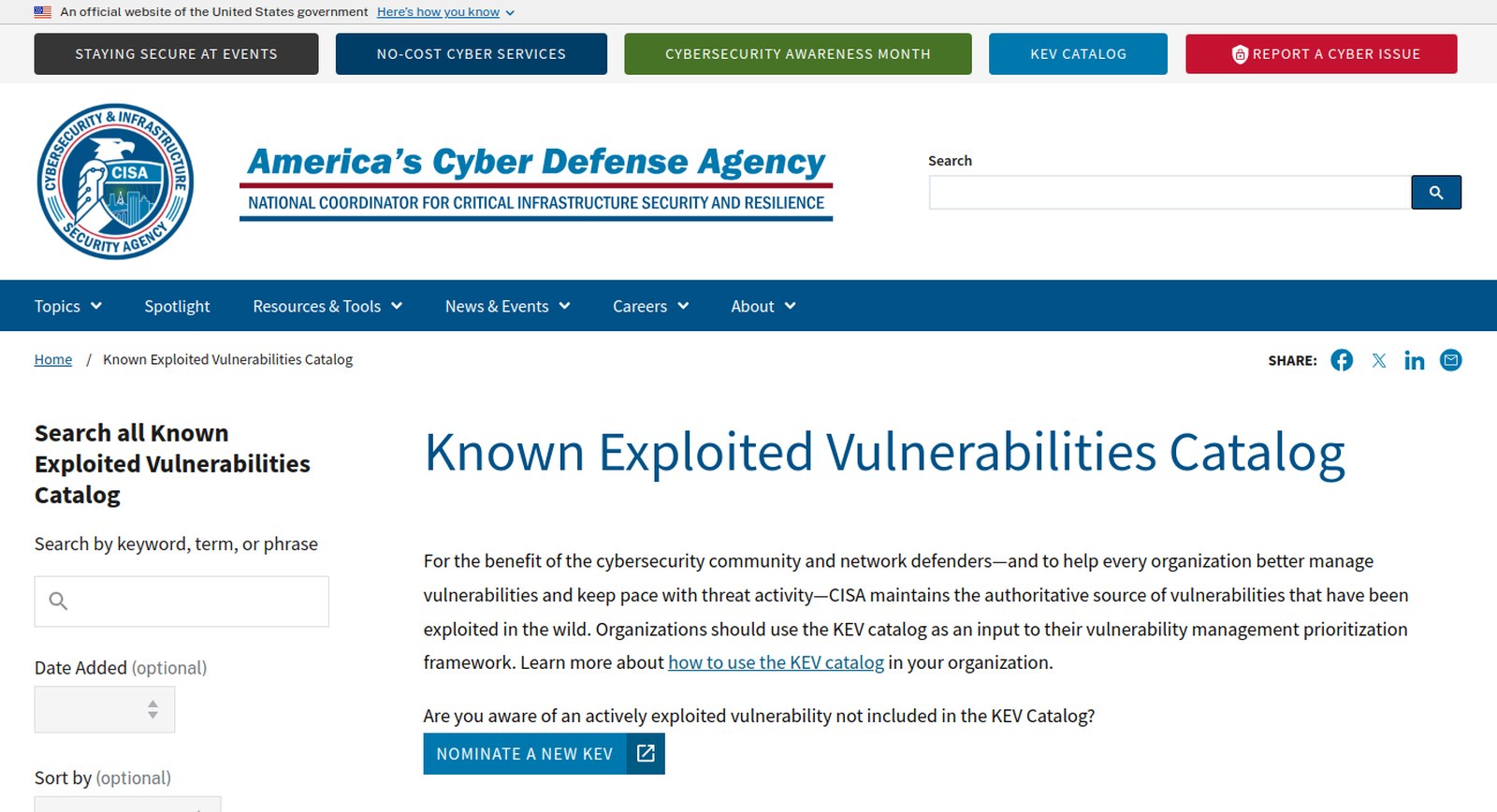
SonicWall added CVE-2026-83548 and CVE-2026-83549 to its own advisory with confirmation of active exploitation, and CISA followed by adding both to its Known Exploited Vulnerabilities catalog, a list reserved specifically for flaws that are not theoretical risks but documented, real-world attacks.
Affected builds include SMA 1000 firmware 12.4.3-03453 and earlier, along with 12.5.0-02835 and earlier. If your organization runs an SMA 1000 appliance and has not confirmed its firmware version against that list this week, that confirmation should happen before anything else on today's list.
Why This One Hits Different
Not every critical vulnerability gets attackers moving quickly. This one had everything working in its favor from an attacker's perspective. It requires zero authentication, which means no phishing, no credential theft, no social engineering step at all. It sits on a device that is explicitly designed to be reachable from anywhere. And it is a well-known, widely deployed product, meaning a single scan across the internet can surface thousands of potential targets in an afternoon.
Remote access appliances like the SMA 1000 also tend to sit in a peculiar blind spot inside a company's own security program. They are managed by network or infrastructure teams rather than application security teams, they get patched on their own cadence rather than a unified one, and because they are the thing that makes remote work possible, taking them offline for maintenance carries real business friction that a lot of organizations are reluctant to accept, even briefly, even for a patch this urgent.
What to Actually Do This Week
If your organization runs an SMA 1000 appliance, patch it now, not during the next scheduled maintenance window. A pre-authentication, no-user-interaction, perfect-CVSS vulnerability with confirmed active exploitation does not wait for a convenient Tuesday.
After patching, assume compromise is possible and go looking for it. Review appliance logs for unusual requests to the Appliance Work Place interface, particularly anything resembling outbound or proxied connections initiated from the device itself rather than from an authenticated user session. If your appliance supports detailed access logging, this is the week to actually read it rather than let it accumulate.
Check whether the appliance has made any unexpected outbound connections since the vulnerability's disclosure window opened. An SSRF flaw's entire purpose is tricking a server into reaching somewhere it should not, so unusual outbound traffic originating from the appliance itself is one of the clearer signs something already happened.
Rotate any credentials or session tokens that the appliance handles, particularly if remote code execution through the chained flaw is a realistic possibility in your environment. A patched vulnerability does not undo anything an attacker already collected before the patch went in.
And more broadly, treat internet-facing remote access infrastructure as a first-class citizen in your vulnerability management program, not an afterthought that gets attention once a year. These devices sit at the exact intersection of "reachable by anyone" and "trusted by everyone inside," which is precisely the combination attackers go looking for first.
The Bigger Pattern
CVE-2026-83548 is not an isolated event. It is one entry in a long, ongoing run of critical vulnerabilities discovered in exactly the kind of infrastructure that was built to keep businesses secure in the first place, VPN gateways, remote access appliances, and edge devices that sit directly on the internet by necessity. CISA's Known Exploited Vulnerabilities catalog has added dozens of these appliance-level flaws throughout 2026 alone, and the appliances themselves keep getting more attractive targets precisely because they hold the keys to everything behind them.
At AetherGuard Technologies, patch management and continuous vulnerability monitoring for exactly this class of infrastructure, VPNs, remote access gateways, and other internet-facing appliances, is core to what we do for managed clients. If you are not certain whether your remote access infrastructure is currently exposed to something like this, that uncertainty is worth resolving today rather than after the next headline.